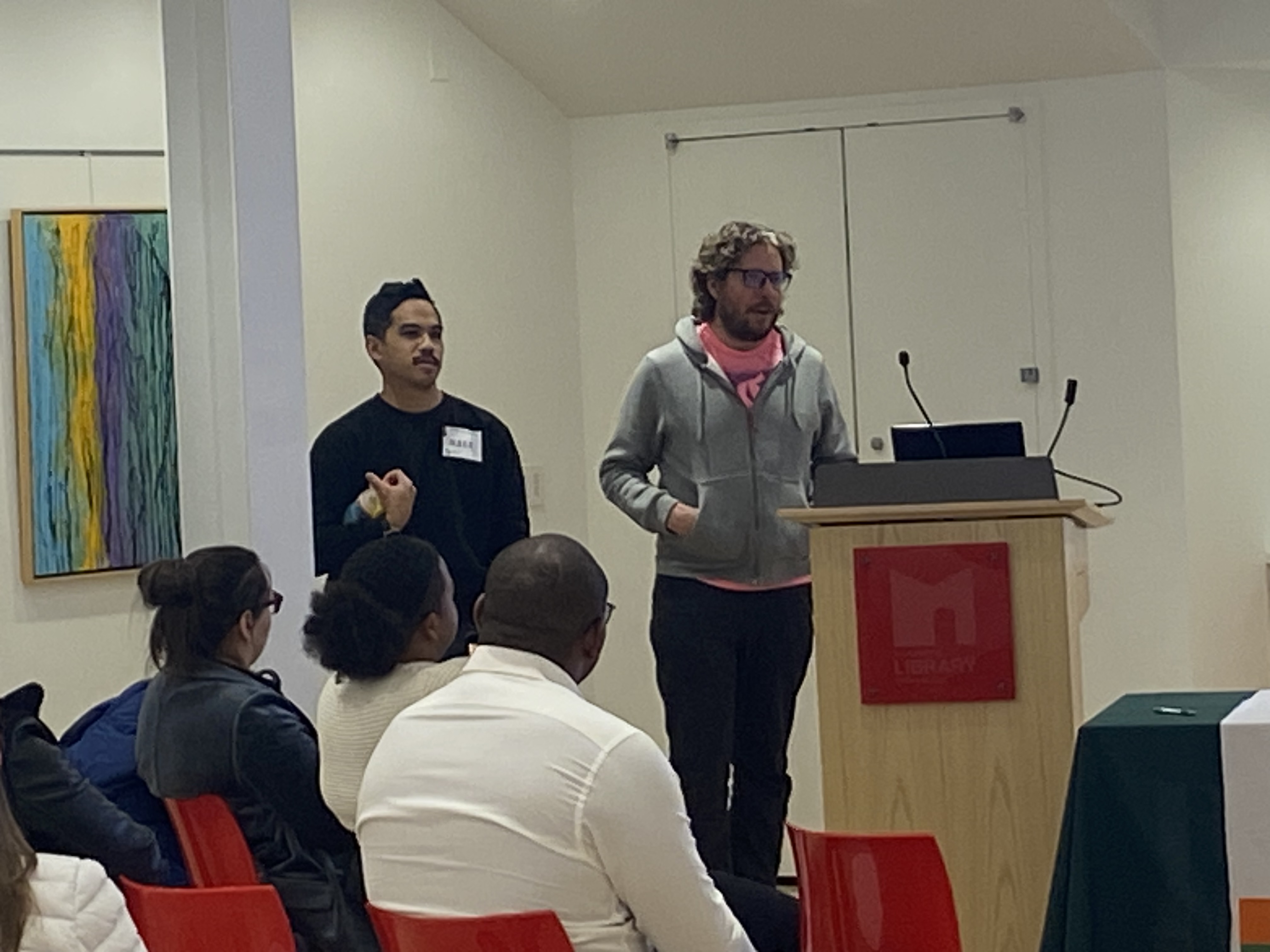
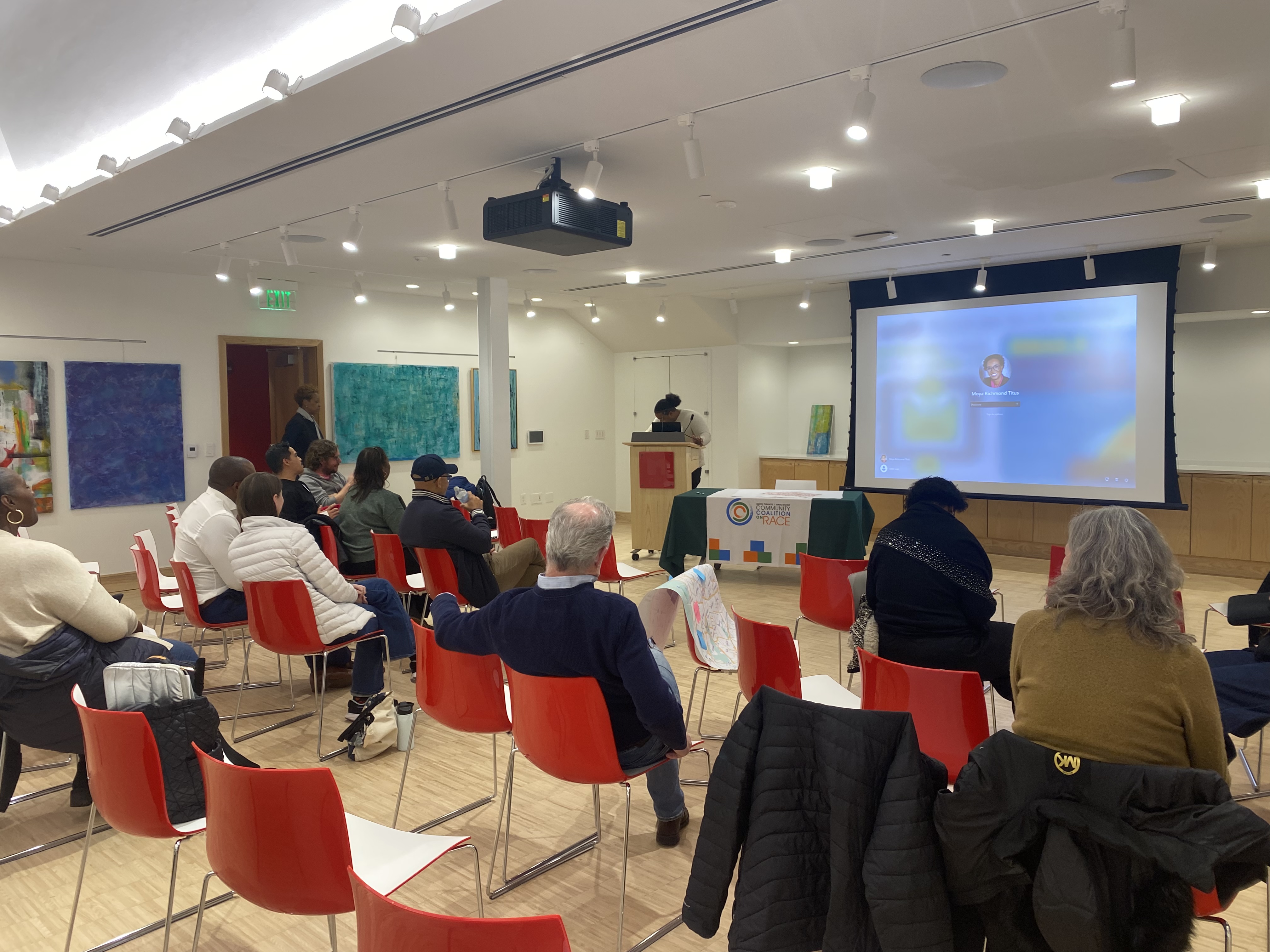
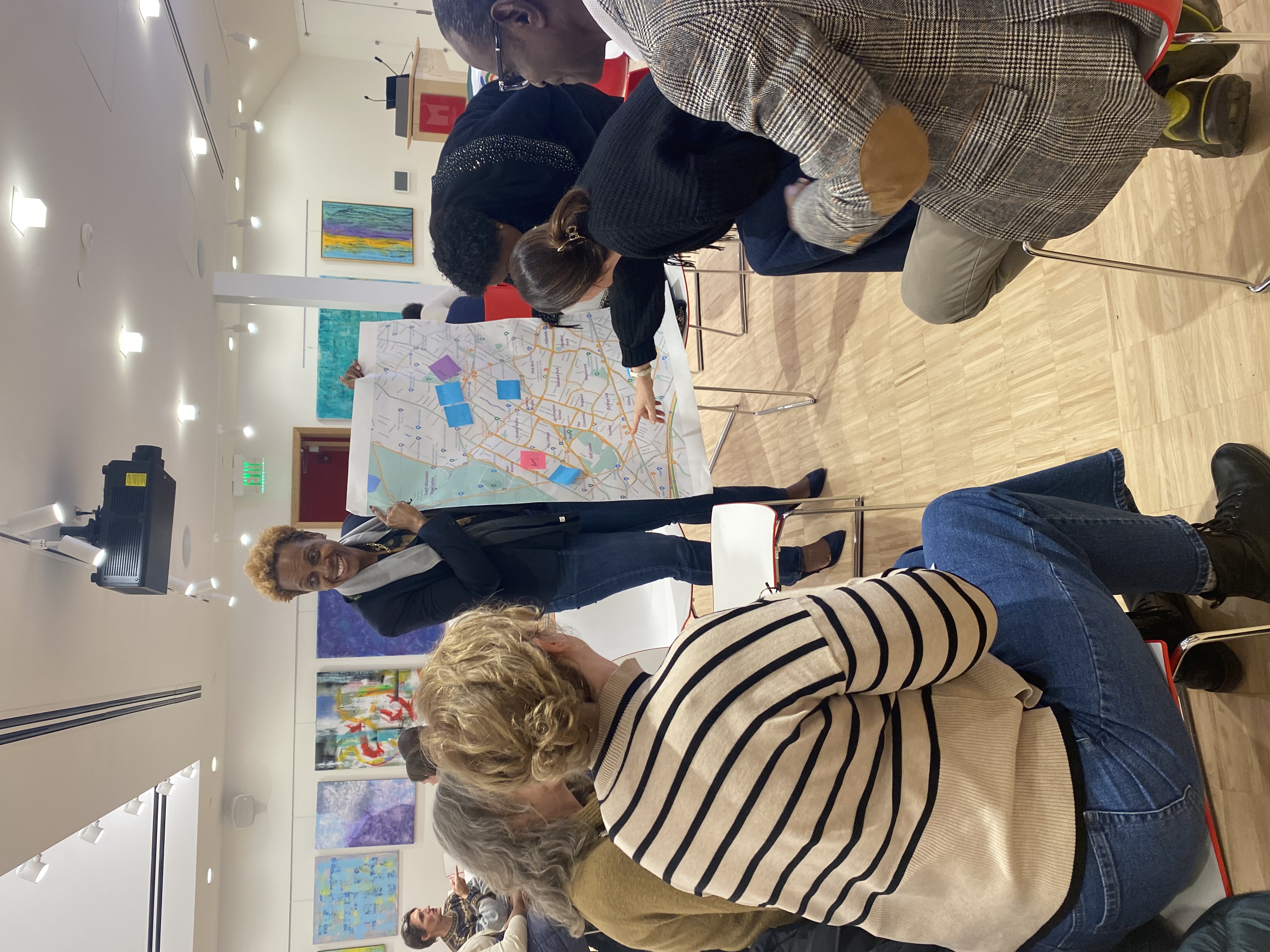
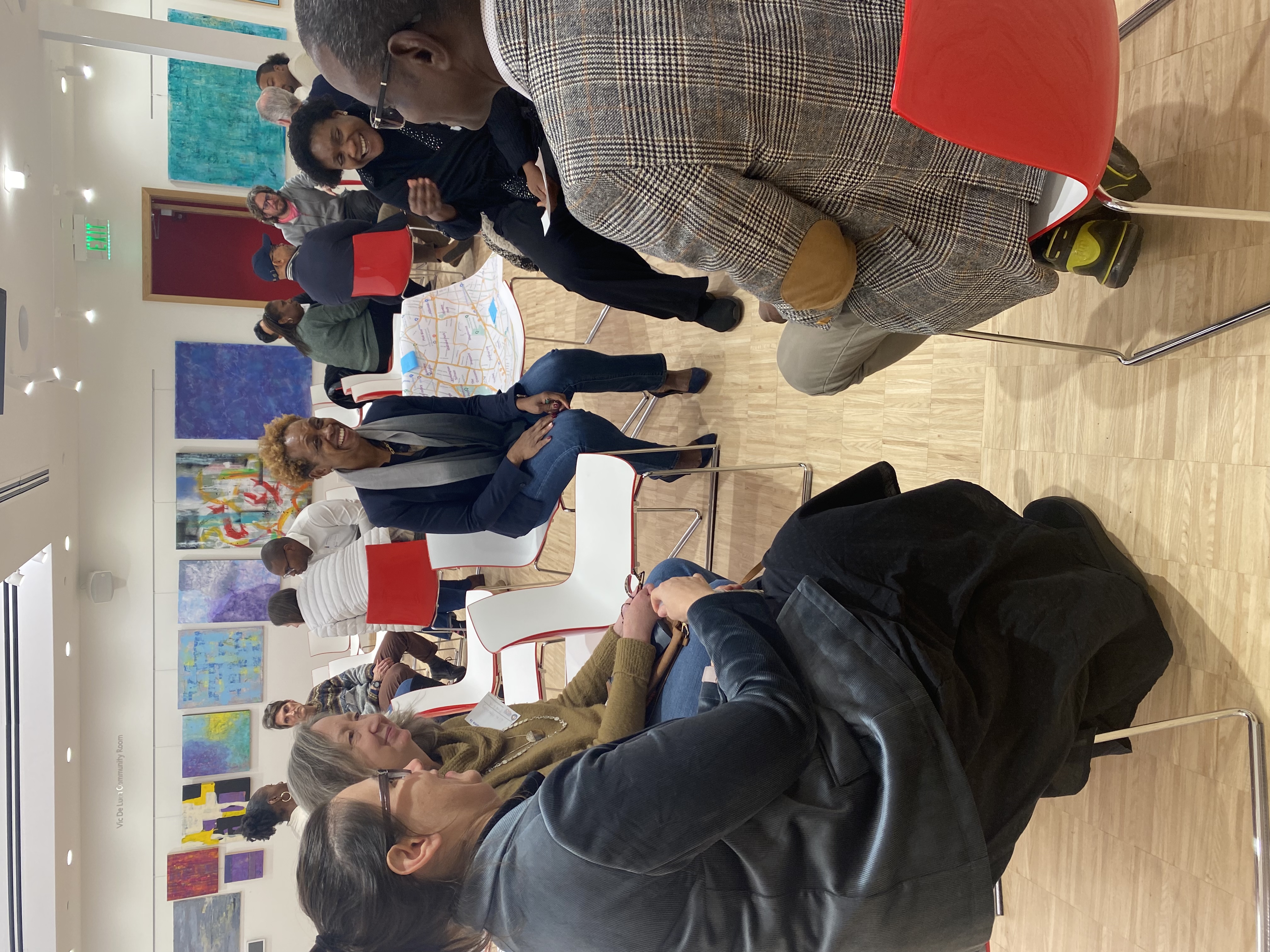
The evening featured updates on the spaces and places where neighbors connect. We learned about the greenway, the establishment of safe bike lanes, and the SOMA bike bus. We also heard from a group of dads/husbands who formed a neighborhood social group that has regular gatherings with food and drinks as a way to relax and form new friendships locally. We also shared why studying town demographics is important to our mission and had a look at neighborhood integration levels. Attendees shared their experiences with best practices in forming and strengthening community bonds through block parties, Halloween traditions, group chats, and more.
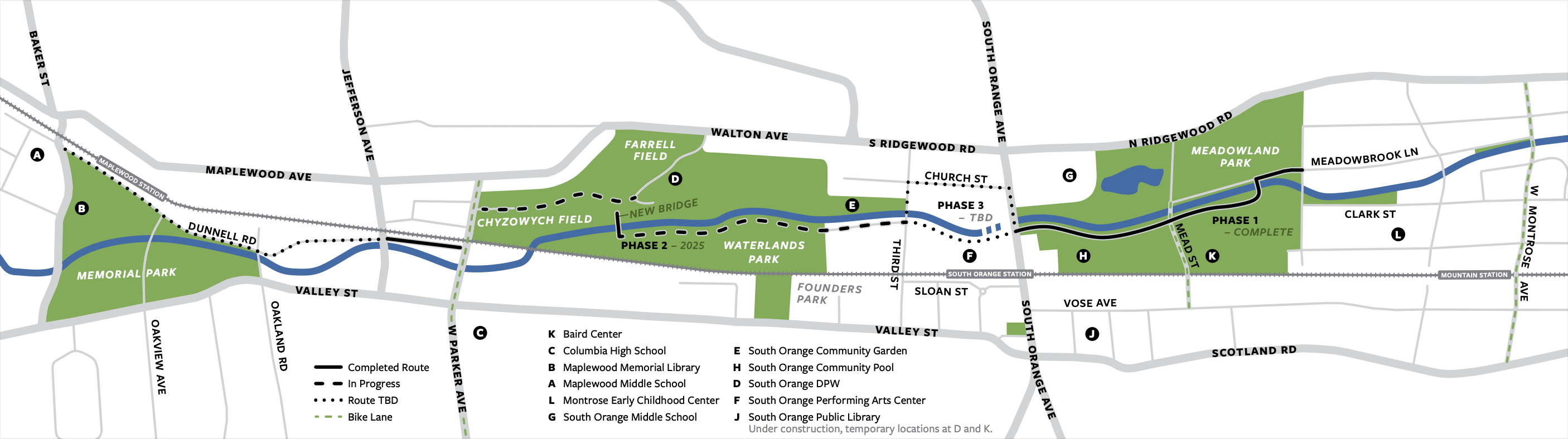
The South Orange-Maplewood Rahway River Greenway: South Orange has been working to create a Greenway along the East Branch of the Rahway River, running from W. Montrose Avenue to Maplewood. The greenway is a corridor that connects parks and other open spaces, providing a place for car-free walking, biking, and scootering, while also protecting waterways and natural habitat. South Orange is looking to complete the River Greenway from Third St to Waterlands Park to Chyzowych Field — where the path will connect with the new W. Parker-to-Jefferson section in Maplewood in the next year or so. Read more here.
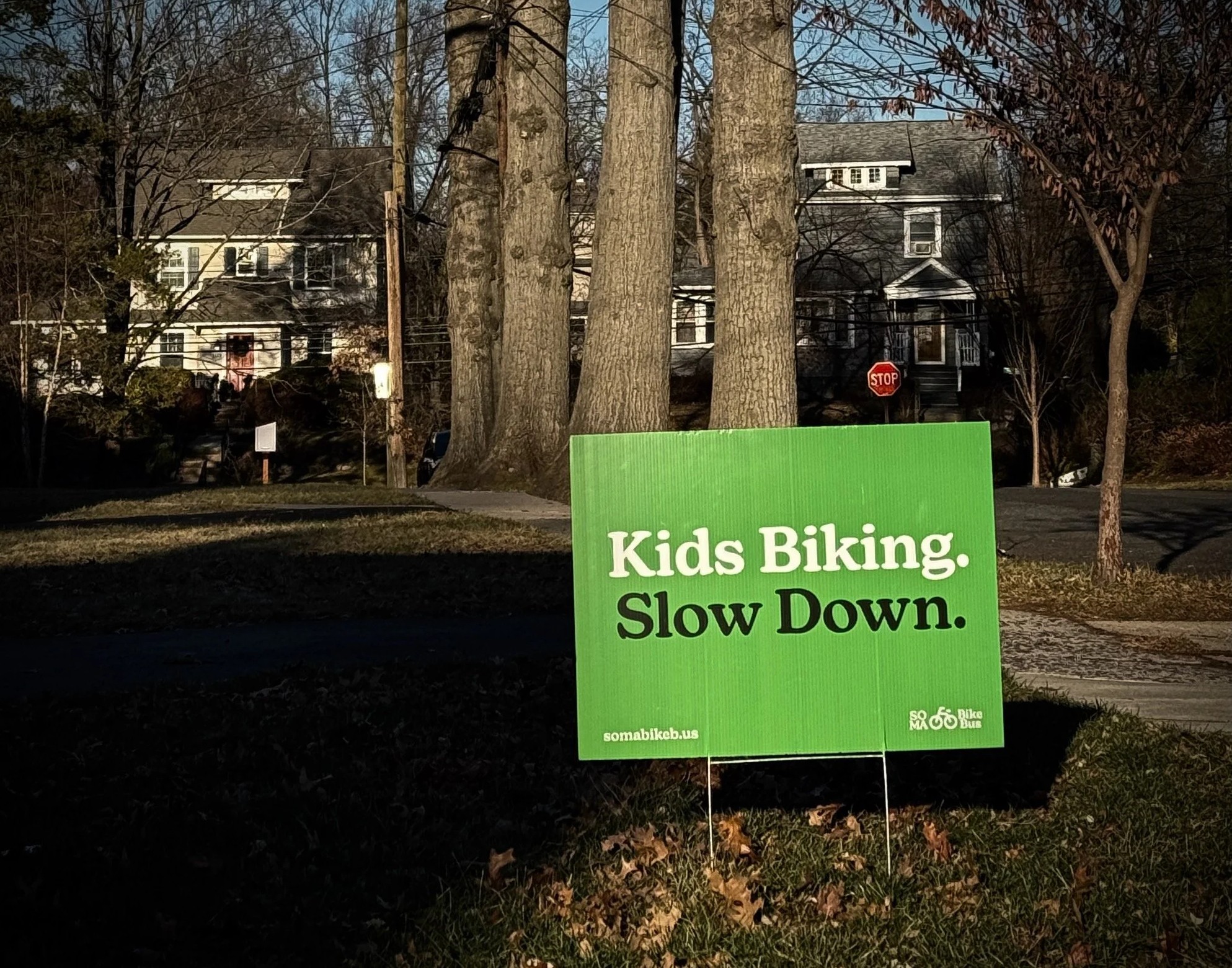
Bike Bus: SOMa Bike Bus is a community group in South Orange & Maplewood NJ that rides our bikes together. We run weekly bike bus routes to 5 local schools, and bring the community together for special events. More than 100 elementary school students along with parents are biking to school together on safe routes and in large groups every Friday morning, and gathering for social rides as well. We learned that the kids love biking to school and the parents love this special time outdoors. To learn how to get involved, visit their website here: somabikeb.us
Demographics
Demographic data supports informed decision making.
It allows us to:
- Understand the racial and ethnic makeup of the community to address specific equity and inclusion issues
- Identify patterns of resegregation and/or integration
- Identify demographic trends so that we can be responsive to changing community needs
- Seek insight into causes when any demographic group’s representation changes
The Coalition will be looking at 2020-2024 census data when it is available in 2026 to see what changes and challenges we are facing since the 2020 census. See our last report--which showed an increase in integration levels by neighborhood--here.
Showing 1 reaction
Sign in with
Facebook Twitter